
Welcome
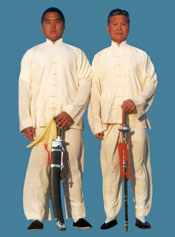
Master Tung Chen Wei is an internationally renowned fourth generation Tai Chi Chuan master, who has practiced Tai Chi ever since he was a child. He has over thirty years' experience of teaching Tai Chi and has taught students both in the United States and around the world.
Here you will find information about our school, whose principal location is in Los Angeles. We welcome new students of all ages and abilities!
Our students are fortunate to have the extended opportunity to attend Tai Chi Camps and Workshops put on by Master Tung throughout the world.
Calendar
All dates are presented in local time. Only upcoming events are listed.
November
January
February
April
Classes
California
New Hampshire
Master Tung
董振威
Master Tung Chen Wei
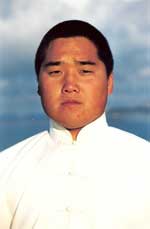
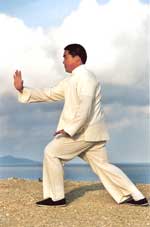
Master Tung Chen Wei was born in Los Angeles, California in 1977. He is naturally intelligent and active, and is inclined to be bold and uninhibited. He is also modest and respectful with people.
It was obvious that Grandmaster Tung Hu Ling, his grandfather, was exceptionally fond of him. Not only did the Grandmaster supervise his Tai Chi Chuan practices personally, the Grandmaster was seldom seen without him at his side.
When he was in secondary school, he was already assisting his father Master Tung Kai Ying in giving instructions to students in his spare time. Later on, to assist his father, he became increasingly involved in the running and developing of the Taichi college. He also makes frequent trips abroad and within the United States to teach Tai Chi Chuan. He is well liked by the many students that he has.
董繼英
Master Tung Kai Ying
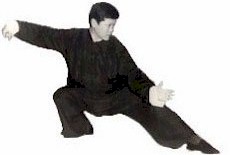
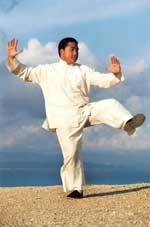
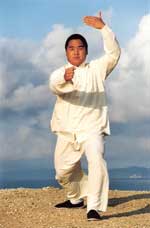
Born in the ninth month of 1941, the eldest son of the third generation of Tung Family martial artists, there was never a time in his life when Master Tung Kai Ying was not learning Tai Chi Chuan. He began his formal training in the village at the age of six under the supervision of his uncle while his father, Master Tung Hu Ling, and grandfather, Master Tung Ying Chieh, were down south establishing their school. Fully immersing himself in his studies from the onset, he quickly proved that he was more than ready for the great task that lay before him.
When he reached the age of fourteen he was invited to come live with his grandfather in Hong Kong in order to receive deeper training in Tai Chi Chuan. It was there, in recognition of his clear ability and bright potential, that his grandfather gave him the honorary name of "Kai Ying," which in Cantonese means "Succeeding Ying" and plainly reveals the deep level of trust that existed between the great master and his young apprentice. The grateful Kai Ying spent the next several years in very close contact with his grandfather and learned his entire system of Tai Chi Chuan, not only how to practice and apply it, but how to teach it as well. He eventually came to preside over the majority of classes in Hong Kong at that time, often giving the bulk of instruction while his grandfather would quietly watch on from the side.
The final phase of his early training began in 1961, when his grandfather passed away and his father, Master Tung Hu Ling, returned to Hong Kong to assume the head position at the Gymnasium. In the following year, when it came time for Master Tung Hu Ling to go back to Singapore and Malaysia in order to resume the instruction of his many students there, he sent his son, Master Tung Kai Ying, in his stead. His students were deeply impressed by the enthusiasm and skill of their new teacher, and the size of the classes grew rapidly. Subsequently, Master Tung Kai Ying spent the next several years traveling back and forth between Hong Kong, Thailand, Malaysia, and Singapore, continuously practicing and teaching, gaining invaluable experiences, and significantly deepening his insight into the meaning of the fist.
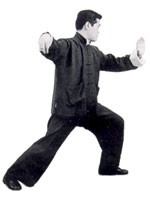
So by the time he arrived in Los Angeles, California, in 1971, Master Tung Kai Ying could not have been more prepared for the difficult task of bringing the traditional Chinese art of Tai Chi Chuan to the modern Western world. Initially earning a living as an acupuncturist, he set up classes in Los Angeles and San Francisco and began to build his initial layers of students. Immediately gaining the respect of the fledgling Tai Chi community of the Western States, he appeared on magazine covers and festival stages more than once and was well known for his elegant demonstrations, friendly displays of power, and open readiness to share what he knew. The number of students in his classes grew steadily as martial arts enthusiasts from all around came to see what they could learn from him.
Never one to dwell on his successes, Master Tung Kai Ying has simply continued to practice and teach, selflessly helping his students to find their strength. In 1984 he was invited on his first of many teaching trips to Europe, via Denmark and France, and in accepting, opened the door to a fruitful relationship with yet another continent. Also in that same year he hosted his first of many intensive Tai Chi Chuan "camps" in the redwood forest just south of San Francisco. Here, dedicated students were given the opportunity to study Tai Chi Chuan in the traditional manner of living with the master and practicing several times a day.
Before long he was teaching in Italy and Scandinavia as well, all the while faithfully maintaining his Asian contacts and continuing to cultivate his ever-growing American school. His many students around the world began to number in the thousands. Students became teachers and began generating students of their own -- all held together by the Master's keen eye and strong guidance. From Hong Kong to Singapore and Thailand to Hawaii, from California to Colorado and Arizona to New England, from Sicily to Paris and Finland to Greece, Tung family Tai Chi Chuan has almost completely encircled the globe.
The full circuit was finally achieved in September of 1999 when Master Tung returned to his home town of Xing Tai, one of the oldest cities in China, with an entourage of 216 Western students from 8 different countries. There he was greeted with the highest honors from the mayor at a festival held in his name at the center of town. There were over 20,000 people in attendance, all eager to witness the return of the master. None were disappointed by the caliber of the demonstrations and the sincerity of the speeches. The mayor praised Master Tung not only for his supreme skill in the martial arts, but also for the invaluable service he has done the world by so effectively sharing and communicating the cultural wisdom of China.
Although still climbing towards the peak of his long and illustrious career, Master Tung Kai Ying has fully realized his grandfather's dream and successfully established the legitimate presence of Tai Chi Chuan on the world stage, entirely unabridged and unadulterated. Over the years, there have been many great practitioners of Tai Chi Chuan, but very few of them have been great teachers as well. Continuously radiating a calm and vital blend of modesty, confidence, joy and perseverance, he has touched and inspired countless lives with his steady and patient efforts. Many people who otherwise would not have had the opportunity to learn authentic Tai Chi Chuan, thanks to the considerable accomplishments of Master Tung and his family, are now able to enjoy the great fortune of its timeless gift.
— by Christopher Kiely, Vermont
董虎嶺
Master Tung Hu Ling
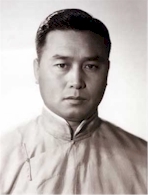
Master Tung Hu Ling, born in 1917, was a native of Ren County in Hebei province. From a very young age, he was known to possess high intelligence and an inquisitive mind. He was particularly fond of martial arts, and he studied under many distinguished teachers. A strong foundation of Taichi skill was laid by his father, Grandmaster Tung Ying Kit. He also had the benefit of being personally tutored by his father’s teacher, Taichi Grandmaster Yang Chenfu.
Responding to his father’s call for the promulgation of Taichi, he came to Hong Kong in 1947 to help in the running of the “Tung Ying Kit Taichichuan Gymnasium”. In 1954, leaders of the Chinese community in Thailand invited Grandmaster Tung Ying Kit to tour the country and teach their members taichichuan. Master Tung Hu Ling undertook the first teaching tour there, which was met with great enthusiasm. He established the Thailand chapter of the “Tung Ying Kit Taichichuan” and subsequently the number of students expanded rapidly. The following year, Grandmaster Tung Ying Kit toured South East Asia, where he was met with special welcoming activities organized by the students. These included a motorcade through the city centre. In the meantime, Master Tung Hu Ling had been extending his teaching activities to include Singapore and Malaysia. This explains how many of the Yang School Taichichuan practitioners in Hong Kong, Macau, Singapore, Malaysia, and Thailand could trace their lineage back to the first students of the two Grandmasters in these places.
In February of 1957, Master Tung Hu Ling produced his famous book “Applications Of Taichichuan”. There were pictures of him practicing with his brother Junling (the third son of Grandmaster Tung Ying Kit) in the demonstration of the various forms and applications of the Taichi martial art. The book was enthusiastically and widely received by people practicing Taichichuan.
When Grandmaster Tung Ying Kit passed away in 1961, Master Tung Hu Ling inherited his father’s mission. Together with his sister Jasmine and his son Kai Ying, they continued to promote and extend taichichuan in Hong Kong, Macau and South East Asia.
Master Tung Hu Ling was invited to visit North America in 1965. His traveling took him to San Francisco, Los Angeles, New York, Toronto and Hawaii. Many people became his students during this period. Since then, Master Tung Hu Ling had established a firm foundation of Yang style Taichi overseas.
In 1966, the Master emigrated to Hawaii and established his gymnasium. His son Kai Ying moved to Hawaii the following year, and later they expanded their teaching activities in Los Angeles.
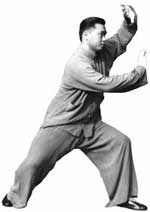
Master Tung Hu Ling passed away in 1992. Throughout his life, he had been a keen and disciplined student and teacher of taichichuan. His modesty and readiness to accept and study different views and perspectives, as well as his profound understanding of taichichuan, enabled him to take his art to the very peak. This was well known to people far and wide. As a person, he was polite and amiable, and was above political and worldly considerations. As a teacher, he was patient and considerate, and approached his students with carefully thought-out methods. He was a role model for all of the participants of Taichichuan.
董英傑
Master Tung Ying Chieh
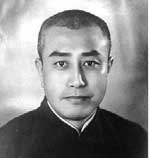
Taichi Grandmaster Tung Ying Kit was a native of Ren County of Hebei province. His original given name was “Wen Ke” and was later known as “Ying Kit”. He first started learning martial arts from Liu Ying Shou, a well known armed escort. Later he was recommended by Liu to study under Li Zenhui, a student of the famous Taichi master in Guang Fu. Subsequently for a number of years he also studied the Hao school of Taichi under Li Xiangyuan, a student of the well known Taichi master Hao Weizhen.
Then he heard about grandmaster Yang Chen Fu, head of the Yang school of Tai Chi, teaching in Beijing. With great admiration, he set forth to become his student and learned very eagerly. Yang was very pleased with him and took him along whenever and wherever he traveled to teach, setting up the “Zhi Rou Taijiquan Society” in 1926 in Shanghai, and the “Nanjing Central Martial Arts Gymnasium” in 1928 in Nanjing. In those 10 years, Master Tung was Yang’s chief assistant instructor.
Master Tung not only excelled in martial arts, but was also a scholar well versed in literature and composition. He was the principal contributor in Yang’s famous book “Applications Of Taijiquan”, published by the Commercial Press in 1931. In recognition of this and other contributions, Master Tung was featured with a portrait photograph in the later book “The Surviving Works Of Yang Chenfu” published by Hua Press in 1987.
In 1934, Master Yang was invited to teach in Guangzhou. He brought Master Tung and his elder son Shouzhong. Unfortunately, he had difficulty acclimatizing and had to return to Shanghai with his son. He asked Master Tung to stay and delegated the teaching to him. Sadly, the Grandmaster Yang died the following year.
In 1936, Master Tung was invited to teach Tai Chi in Hong Kong where he established the famous “Tung Ying Kit Taichichuan Gymnasium” and extensively promulgated the Yang style of Tai Chi.
In 1941, while the Japanese occupied Hong Kong, Master Tung moved to Macau and established another Tai Chi gymnasium there. He returned to Hong Kong after the war in 1945 and summoned his three sons, Hu Ling, Jinling, Jinbao to assist him in teaching Tai Chi. Based on the many years’ keen learning, deep perception, and vast experience, Master Tung wrote the classic “The Meaning And Significance Of The Taichichuan Practice” in which he also introduced his own creation, “ The Tung Ying Kit Tai Chi Express”. This book became an instant success and was well received widely.
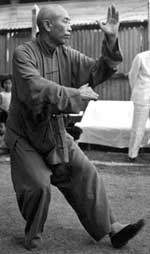
As his name spread far and wide, he became a legend in the art of Tai Chi and received invitations from all over the Far East. In his later years, he traveled extensively to Thailand, Singapore, and Malaysia, teaching and promulgating Tai Chi and setting up gymnasiums in the capital cities. His eldest son, Hu Ling, and later his grandson, Kai Ying, took turns to continue his teaching in these places.
When Master Tung passed away in 1966, he left a legacy of high renown. This was fortunately capably upheld by his son Hu Ling in Hawaii, daughter Jasmine Mood Lay in Hong Kong, and grandsons Kai Ying and Zengchen in Los Angeles and Hawaii respectively – the latter two also making regular trips to various cities in Europe.